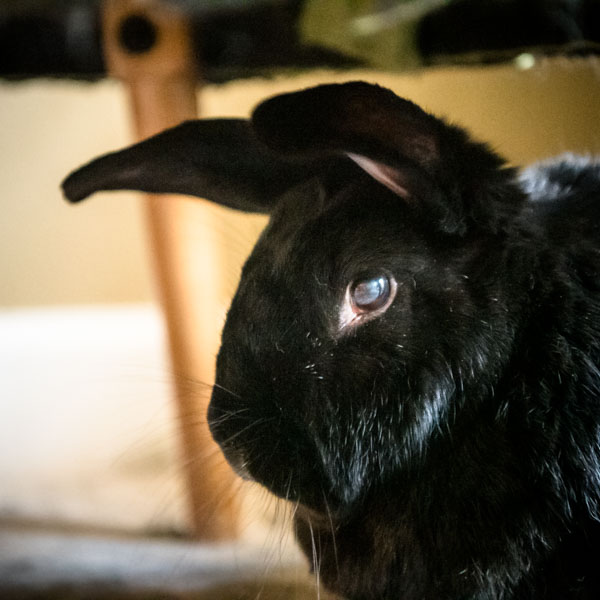
RABBITS INSTINCTIVELY choose specific spots (usually a corner) for urine and most of their poop. For urine training, place a litter box where they prefer. Poop training involves providing a designated, private area. Here are a few tips and a helpful video for litter box training your rabbit.
Can a rabbit be too old to be litter trained?
Older rabbits are actually easier to train than younger rabbits, especially babies. If your rabbit is not spayed or neutered, you may have much more difficulty litter training your bun due to territorial tendencies.
What Type of Litter Box Is Best for Rabbits?
Rabbits don’t need anything fancy, but the right litter box makes all the difference. The best litter boxes for rabbits are roomy, easy to clean, and safe for their feet.
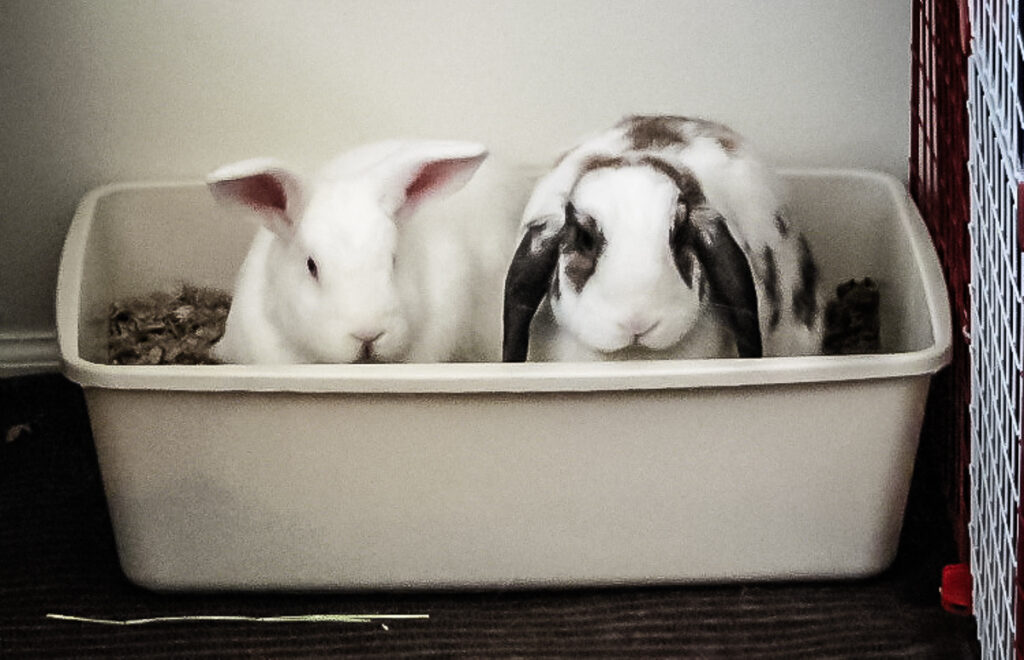
Litterbox Size and shape
Choose a box large enough for your rabbit to comfortably turn around and stretch out. Cats and rabbits have similar bathroom habits, so a medium or large cat litter pan usually works perfectly. For larger breeds or bonded pairs, try an under-bed storage box with low sides for easy access.
Litterbox Material
Plastic is ideal — it’s lightweight, easy to disinfect, and doesn’t absorb odor. Avoid metal or wire bottoms, which can hurt your rabbit’s feet or cause sore hocks.
Sided options:
Some rabbits like a box with one low entry side and three higher sides for privacy and to contain hay and stray pellets. A corner box can work for small rabbits, but it’s often too tight for larger ones.
Hay connection:
Rabbits like to munch while they potty. Place a hay rack or pile of fresh hay at one end of the box or just outside it. This encourages consistent litter box use and mimics natural foraging behavior.
What to avoid:
Skip any box with grates or wire mesh — they’re uncomfortable and can trap waste underneath, causing ammonia buildup. Also avoid boxes labeled for “small animals” that are too tiny; your rabbit will simply ignore them.
Quick tip:
If you share your home with an older or disabled rabbit, cut a lower entry side or use a puppy pad under the front edge for easier access.
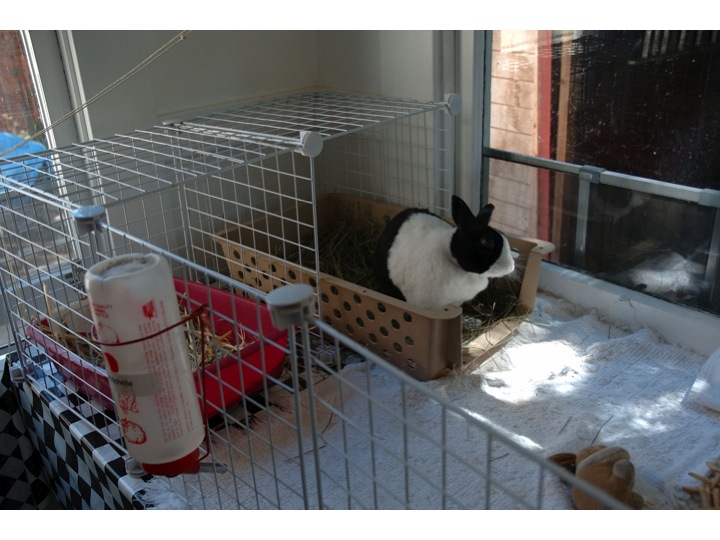
What Type of Litter Is Best for Rabbits?
The best rabbit litter is safe, absorbent, and low in dust. Rabbits spend a lot of time in their litter boxes, so the material you choose matters for both their comfort and health.
Recommended litters:
- Paper-based pellets or shredded paper (brands like Yesterday’s News or Carefresh): soft, absorbent, and safe if a few bits are accidentally eaten.
- Compressed paper or wood pulp pellets (like Feline Pine): excellent odor control and low dust, ideal for rabbits who dig.
- Natural wheat- or grass-based litters: biodegradable and gentle on sensitive paws.
You only need a thin layer in the bottom of the box—just enough to absorb moisture. Top it with fresh hay to encourage your rabbit to use the box consistently.
Avoid these materials:
- Clay or clumping cat litter: dangerous if ingested and can cause intestinal blockages.
- Pine or cedar shavings: contain aromatic oils that can irritate a rabbit’s respiratory system and liver.
- Corn cob or walnut shell litter: may mold easily and isn’t absorbent enough.
I’ve been trying to litter train my rabbit for weeks, but he continues to refuse to keep his waste in the litter box. What can I do?
Rabbits will never have 100% perfect litter habits. They will drop a poop pellet here and there around their cage if they feel like it is their safe zone. This is how rabbits mark their territory. Poop should not be a big deal since proper poop pellets are dry and hard, easy to sweep or pick up, and do not leave a scent.
If your problem is more serious than the above, then continue reading.
If your rabbit is not spayed or neutered, this fact plays a large part in proper litter habits. When rabbits reach puberty anywhere from 3-6 months, their hormones become active. Unfixed rabbits after this age can get very territorial and spray urine and poop everywhere. Spaying and neutering your rabbit will make it more likely for him to learn proper litter habits.
Another reason your rabbit may have messy litter habits is that you are giving him too much freedom at once. Take a look at the Training Methods section of our litter training article. Also take a look at Littertraining for those who want but can’t.
My bunny pees in <insert place>. How do I make it stop?
Clean the mess up with a mixture of white vinegar and water or a pet-safe enzymatic cleanser like Nature’s Miracle to decrease their urge to remark the location. Soap and water alone is not sufficient to remove all chemical traces of the urine even though it may look clean.
Is your rabbit good with using their litter box? If not, take a look at the Training Methods section of our Litter Training article. If your rabbit is not neutered already, the surgery can often make a huge improvement in general litter habits.
If your bunny has good litter box habits already, you may consider adding another litter box in the problematic area. Sometimes, bunnies can get too lazy to hop back to their cages and pens to eliminate. It may be easier to adapt to the rabbit than try to train them out of it.
However, in the case that the problem area is your bed or a couch, this may need to be addressed in a few different ways:
- Keeping the rabbit off the furniture by fencing it off or covering it with a bunny-proof waterproof covering like a shower curtain.
- Keeping a close eye on them to shoo them off and into a litter box when it looks like they are about to pee. Remember to reward the rabbit whenever they voluntarily hop in the litter box to urinate or poop.
- Cover problem furniture with a blanket that already has their scent on it to reduce the urge for additional territorial marking.1
If your rabbit has been consistently excellent with litter training, but it has suddenly changed, environmental changes, stress, and medical problems can also cause poor litter habits. The introduction of a new pet (another rabbit, cat, dog, baby, visitor, boyfriend, etc.) can easily cause your rabbit to feel territorial and pee and poop everywhere. The same may occur if you move around furniture too much or move to a new place. However, as the rabbit gets used to the new environment, their litter habits should return to normal.
If no stressful or environmental factors can be detected, your rabbit may have a urinary tract infection (UTI) or another condition that is causing a weak bladder, especially if you see small dribbling spots as they hop. In this case, please take your rabbit to your rabbit-savvy veterinarian to be properly diagnosed and medicated if necessary.
Also see the Litter Training section Eliminating outside of the box for more reasons why a rabbit may lose their litter training.
How many litter boxes should I have in my house/apartment/room?
For a one-story location with around three to four rooms, one litter box in your rabbit’s enclosure should usually be enough. For more rooms and more than one floor, you might consider having a second litter box in some of the other rooms and on the other floors. Your rabbit will let you know if one is not sufficient.
Can my rabbit share a litter box with my cat?
If your cat requires a clumping litter, it is definitely not safe for your rabbit to share your cat’s litter box. Ingesting too much clumping litter can cause fatal blockages in your rabbit.
It is also better that your rabbit does not share a litter box with your cat for health reasons, especially if your cat eats raw meat or goes outdoors. Infected cat feces can transmit deadly parasitic diseases such as toxoplasmosis, giardia, and cryptosporidiosis; all of which can be fatal to a rabbit within a few days.2 While rabbits may not directly ingest cat feces, rabbits can contract the parasites in households with cats by jumping in a cat’s litter box, stepping in infected cat feces, and then ingesting the parasite when cleaning their feet.
This article is an adaptation of Litter Training FAQ by WabbitWiki and is used under a CC BY-SA 3.0 license. Changes include rewriting some of the passages, modifying some of the hyperlinks, and adding original material. Our revised article is available under a CC Attribution-ShareAlike 4.0 International license.
- u/SlyDonutShopper. (2020). How to keep your rabbit from marking your furniture if you’re having to wait to get them fixed. Retrieved 16 Apr 2020 from https://reddit.com/r/Rabbits/comments/g2lkjc/how_to_keep_your_bun_from_marking_your_furniture/ ↩︎
- Go Pets America, Inc. (n.d). Internal Parasites in Rabbits. Retrieved 19 Aug 2015 from http://www.gopetsamerica.com/small-animals/rabbit/internal-parasites-rabbits.aspx ↩︎